Artificial Intelligence (AI) is no longer just a futuristic concept—it’s becoming an essential part of modern software development. In 2026, businesses and developers are using AI to build applications faster, write cleaner code, improve software quality, and automate repetitive tasks.
From startups to large enterprises, AI is changing the way software is planned, developed, tested, and maintained.
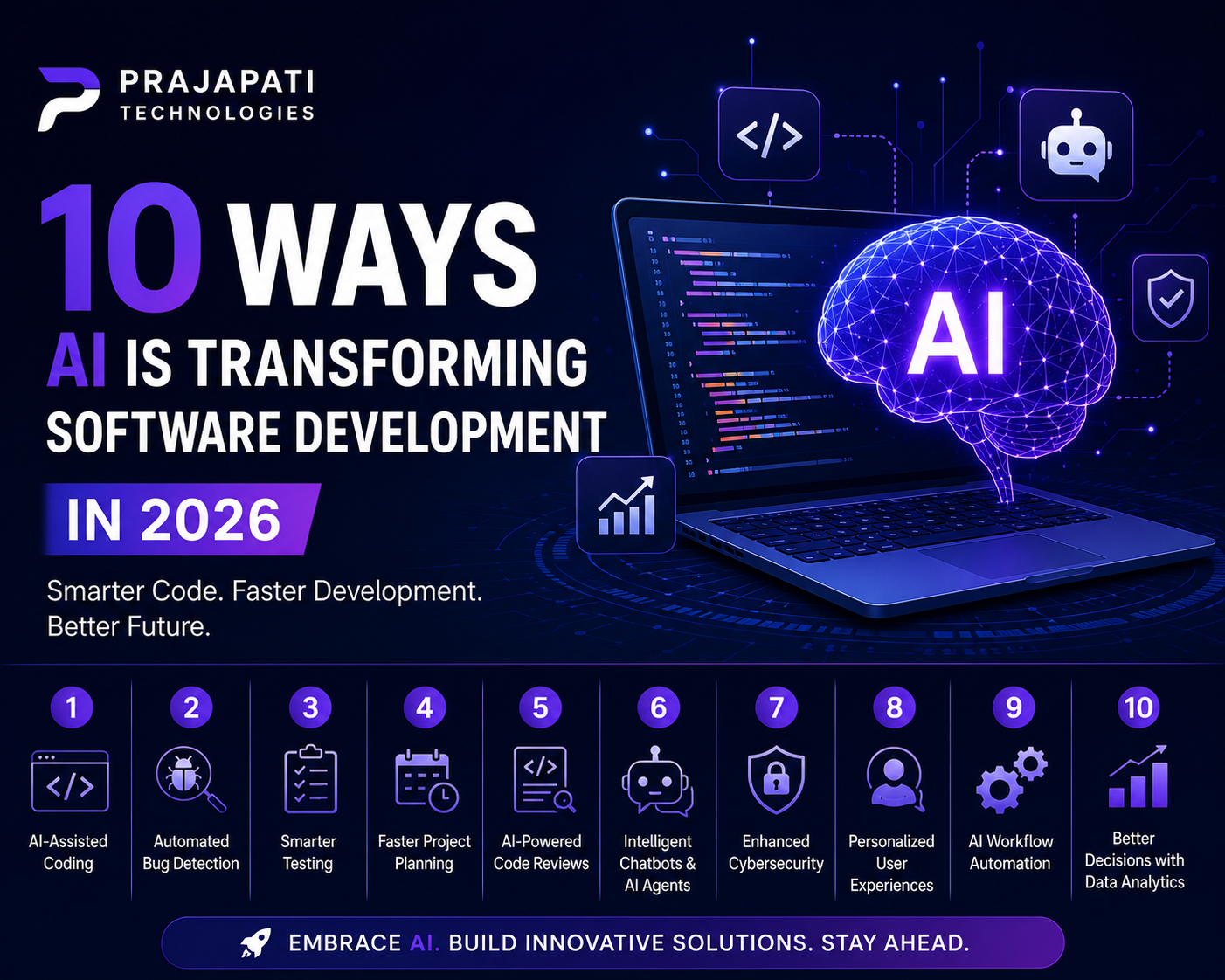
In this article, we’ll explore 10 powerful ways AI is transforming software development and why businesses should embrace this technology.
1. AI-Assisted Coding
AI-powered coding assistants help developers write code faster by suggesting functions, generating boilerplate code, and identifying potential errors in real time.
Benefits
- Faster development
- Reduced coding errors
- Higher productivity
- Better code quality
2. Automated Bug Detection
Finding bugs manually can take hours or even days.
AI tools analyze source code and detect:
- Syntax errors
- Security vulnerabilities
- Performance issues
- Logic mistakes
This helps developers fix problems before deployment.
3. Smarter Software Testing
Software testing is becoming more intelligent with AI.
AI can:
- Generate test cases
- Perform regression testing
- Detect UI changes
- Automate repetitive testing tasks
This improves software reliability while reducing testing time.
4. Faster Project Planning
AI assists project managers by:
- Estimating development timelines
- Predicting project risks
- Allocating resources
- Monitoring project progress
This leads to more accurate planning and better project execution.
5. AI-Powered Code Reviews
Instead of relying solely on manual reviews, AI analyzes code quality and suggests improvements.
It can identify:
- Duplicate code
- Security risks
- Performance bottlenecks
- Coding standard violations
Developers receive instant feedback before deployment.
6. Intelligent Chatbots & AI Agents
Businesses are integrating AI-powered chatbots and AI Agents into websites, mobile apps, and enterprise software.
These solutions help:
- Automate customer support
- Qualify leads
- Answer FAQs
- Schedule appointments
- Improve customer experience
7. Enhanced Cybersecurity
Security is one of the biggest concerns in software development.
AI strengthens security by:
- Detecting suspicious activities
- Identifying malware
- Preventing cyberattacks
- Monitoring user behavior
- Improving fraud detection
This helps businesses protect sensitive data.
8. Personalized User Experiences
AI analyzes user behavior and delivers personalized experiences.
Examples include:
- Product recommendations
- Personalized dashboards
- Smart notifications
- Dynamic content
- Customized app interfaces
This improves user engagement and customer satisfaction.
9. AI Workflow Automation
AI can automate repetitive development tasks such as:
- Documentation generation
- API integration
- Database optimization
- Deployment workflows
- Code formatting
Developers spend less time on routine tasks and more time building innovative solutions.
10. Better Decision-Making with Data Analytics
AI processes large amounts of data and provides actionable insights.
Businesses can:
- Predict customer trends
- Analyze software performance
- Optimize business operations
- Improve product development strategies
This enables faster and more informed decision-making.
Benefits of AI in Software Development
Businesses adopting AI enjoy several advantages:
- Faster software delivery
- Reduced development costs
- Improved code quality
- Enhanced security
- Better user experience
- Increased team productivity
- Smarter automation
- Higher customer satisfaction
Industries Benefiting from AI Development
AI-powered software is transforming industries such as:
- Healthcare
- Finance
- E-commerce
- Education
- Real Estate
- Manufacturing
- Logistics
- Travel & Hospitality
Why Businesses Should Invest in AI Now
Companies that adopt AI early gain a competitive advantage.
Whether it’s automating workflows, improving customer service, or accelerating software development, AI helps businesses innovate faster while reducing operational costs.
The future belongs to businesses that embrace intelligent automation today.